Where is Tobita Shinchi in Osaka?
Look for Sannō (山王), in Nishinari Ward, near Tennōji. A good landmark is Taiyoshi Hyakuban, a historic building that serves meals today. Osaka Metro puts it about a ten-minute walk from Dōbutsuen-mae Station. The address on the map is the restaurant’s: 3-5-25 Sannō.
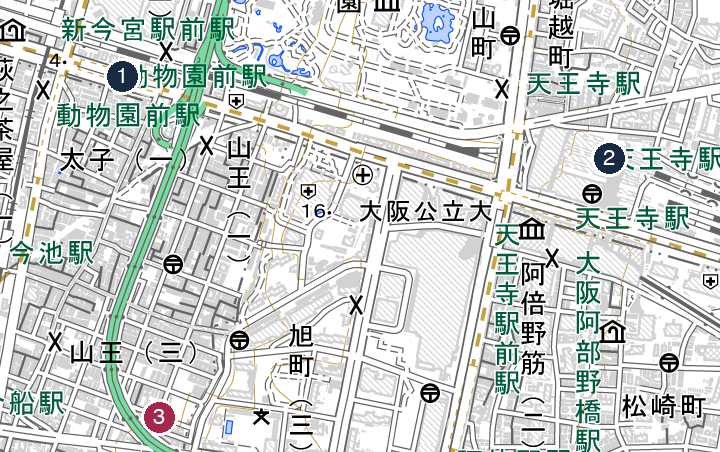
- Dōbutsuen-mae Station
- Tennōji Station
- Taiyoshi Hyakuban, Sannō
Why did a new district open here in 1918?
The story begins across town. In 1912 a fire destroyed the licensed prostitution quarter in Namba. The search for a replacement brought officials to Tobita, then part of Tennōji village. Osaka Prefecture designated the site in 1916. That decision drew organized opposition. Campaigners objected to bringing a licensed quarter into the community, and building approval came only in 1917. By the end of 1918, businesses had opened.
The dates tell three different stories: when officials chose the land, when construction could begin and when the first customers arrived. Tokyo’s Yoshiwara was already nearly three centuries old. Tobita belongs to the railways and urban expansion of modern Osaka.
What changed after the war?
In accounts of postwar Osaka you will see akasen (赤線), the name used for areas where prostitution was tolerated. Japan passed the Anti-Prostitution Act in 1956. It came fully into force on April 1, 1958. The akasen system ended, and the name ryōtei figures in Tobita’s subsequent history. Translating that word as “restaurant” gives you its ordinary meaning. In Tobita, the district’s history explains why you will also encounter it in accounts of the adult trade.
One corner building tells its own version of the story
Taiyoshi Hyakuban predates the change in the law. Osaka City’s architectural account places construction between the late Taishō years and 1928. After the war, the proprietor brought in carpenters and painters. Upstairs, rooms evoked the stages of a journey along the old Tōkaidō road. Around 1954 the building was already operating as a tourist inn. A meal there today takes place inside a nationally registered cultural property. Even the decoration has a history of its own: much of what looks centuries old was made in living memory.
Can foreign visitors go? Can I take photos?
Explore the Tobita street map and 11 listings that mention international customers →
You can find the district from its public streets. Admission to an individual establishment is a separate question. We could not verify a district-wide admission policy or a common standard of English support. An open doorway tells you neither. If staff decline or you cannot understand each other, thank them and move on.
Put the camera away in the district, including on the street. Local establishments expressly ask visitors to refrain from photographing or filming doorways, workers and customers. Save the map before you arrive so you can check it without pointing a phone at anyone.
Comparing Kansai with Tokyo
For the Tokyo side of this history, read how Yoshiwara developed. For Kansai soaplands with published visitor information, see the Kobe Fukuhara map and the Ogoto map in Shiga.